Tuners say that diesel power consists of three elements: Fuel, boost, and timing. Although this is a bit of an oversimplification, it’s essentially correct. Fuel allows the turbo to make boost. Boost increases the volume of air (and pressure) in the combustion chamber. Injection timing triggers the diesel fire at the right moment to maximize the impact of that explosion. Result: power.
Contemporary diesels with electronic controls allow tuners to increase fueling to help make more power. But there are mechanical limits to how much fuel they can access. Making more power at some point will require allowing more fuel through the injector. That’s where upgraded injector nozzles come in.

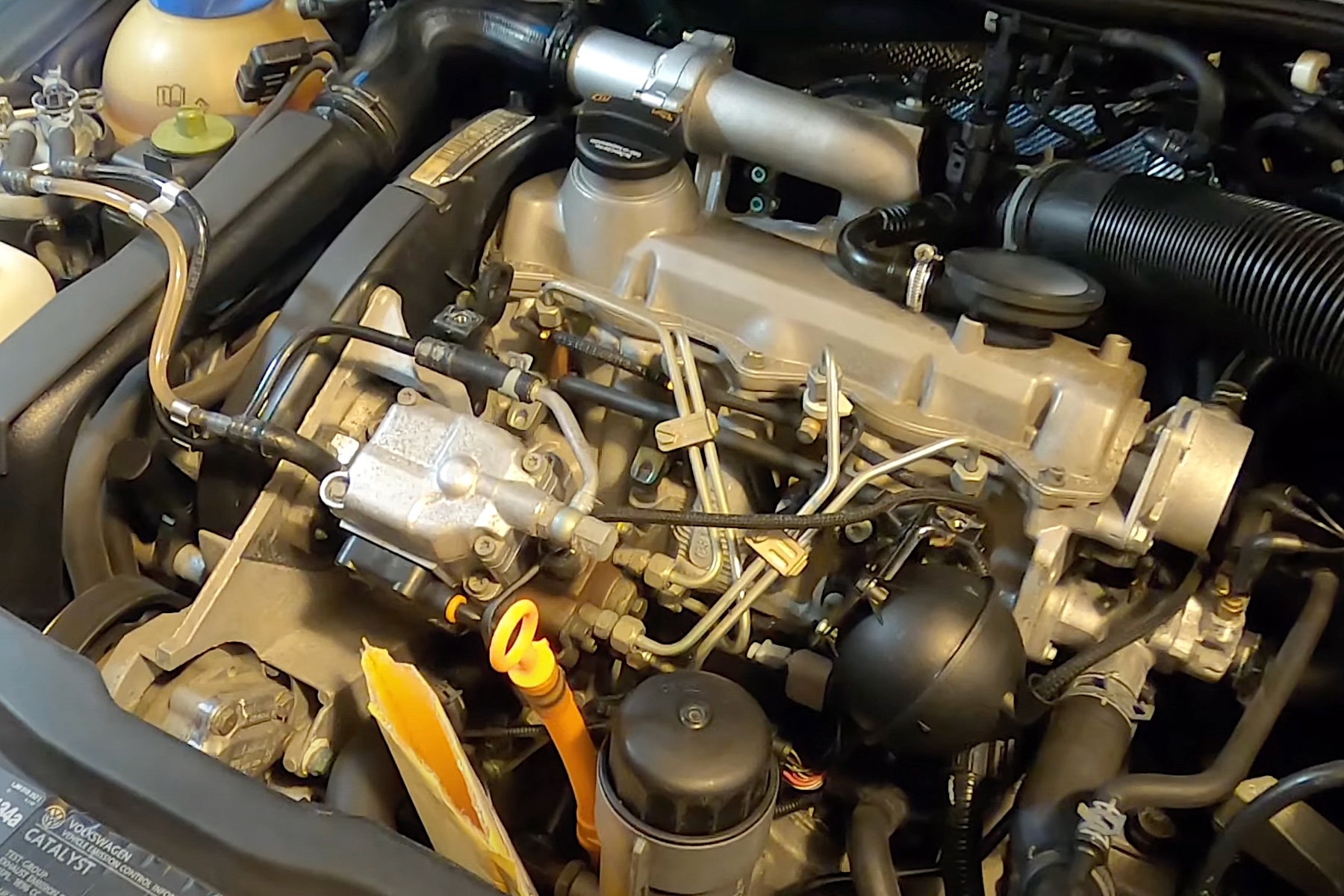
For rotary pump VW TDIs with engine codes 1Z, AHU, and ALH, there are a number of options for delivering more fuel. The first one isn’t an injector nozzle, but the pump itself. The ALH came with a higher output pump in cars with automatic transmissions. The increase in fueling is approximately the same as increasing nozzles by one size. Of course this is an expensive (these days, very expensive) upgrade, so most owners in search of more power will upgrade nozzles first.
Upgrading Your Injectors

Bosio is the primary source for high-quality injector nozzles for VW VE pump injectors. They offer nozzles in two styles in a variety of sizes. Let’s look at the styles they offer:
- Four hole nozzles: These nozzles, usually referred to as Sprints, have the same 4 hole design as the OE Bosch nozzles on VWs.
- Five hole, or “Power Plus” nozzles: These nozzles have both more holes as well as a beveled design on each hole which allows a greater fuel flow and better atomization. Because of this, Power Plus nozzles flow approximately 6% more fuel than the same size 4 hole nozzle.
In addition to improving the hole design, in recent years Bosio has upgraded their Spring nozzles by adding what they call DLC, or diamond-like coating. This coating helps extend nozzle life when using ultra-low sulfur diesel. All Power Plus nozzles have this coating, and many of the Sprint nozzles have it as well, and those are referred to as DLC instead of Sprint.

Nozzle Sizes
Here are some basics on stock nozzle sizes:
- .184 Bosch nozzles were standard on early VE TDIs. Bosio uses the number 706 (preceded by DSLA 150P)
- .170 Bosch nozzles were on later VE TDIs with manual transmissions. However, the most common replacement for these nozzles is the .184 size, same as in the earlier cars. The difference in fueling is nominal.
- .158 Bosch nozzles were used in ‘99.5 – ’03 automatic transmission TDIs. Bosio uses DSLA 150P 442 as its number
Then there are upgraded nozzles. Here’s a chart converting Bosch nozzle sizes to Bosio number.

When replacing nozzles in an unmodified TDI (not chip tuned), many owners will increase the nozzle size one step. That means .184 nozzles in an automatic transmission car, and .205 Bosch size (520 Bosio) in a manual. Others will go slightly larger, to .216 (Bosch) or 502 or 1019 (Bosio). These larger nozzles will work with low smoke and no loss in fuel economy in most cars, although they may require some minor adjustments to fueling using the VCDS diagnostic tool. They will provide a significant increase in torque and power. Although power increase claims vary, most say that going up one nozzle size will add 10-15 HP.
Larger nozzles will deliver fuel more quickly than smaller ones, which is like advancing the injection timing. This will improve starting and can, ironically, increase fuel economy even though the engine can deliver more power. Given there are few, if any, downsides to a minor increase in nozzle size, many owners opt for larger nozzles at replacement time.
A car with large injector nozzles that is otherwise stock will have increased power, but it may also have increased smoke and lower fuel economy. Supporting mods and a tune will help this situation. To increase efficiency and produce less smoke, more air helps. Increasing boost through tuning is a good first step. Upgrading the turbo to one that’s large and can handle more boost is another option, as is improving engine breathing by swapping in a larger intake manifold, airbox and snorkel, or exhaust. As you can imagine, adding mods can get both involved and expensive, and many owners stick with upgraded nozzles and a tune as their best power improvement options.
Selecting the right nozzle
Identifying what nozzles to buy shouldn’t be difficult: If you’re going to tune the engine, ask your tuner what’s best. Tuners for VE pump cars usually fall into one of two camps:
- Ones who want smaller nozzles and increased fueling through tuning,
- Those who want larger nozzles and limit fueling via the tune.
Some feel that, because of the faster fuel delivery of larger nozzles, that bigger is better because of the timing benefit. But not everyone agrees on that. Consider what you think is best when choosing a tuner, and follow their advice. After all, they’re the ones that have to make your engine perform as promised.
In Conclusion
It’s true that you can have your cake and eat it too: more power and the same or improved fuel economy, but only to a point. If you use all the available power frequently, fuel economy will suffer. And making sure your car is mechanically set up properly will go a long way to achieving the goal of power and economy. Mechanical timing (pump, cam, and crank at TDC at the same time) is essential to good performance. As is breathing (i.e. clean intake) and a properly functioning vacuum system to ensure the turbo is boosting correctly.
Rotary pump VW drivers are fortunate that something as simple as a nozzle upgrade can improve their TDI’s performance. And since nozzles are a wear item, replacing them as the car ages is good preventive maintenance. Perhaps you’ll want to go up a nozzle size next time your TDI needs injector service.