Early Days
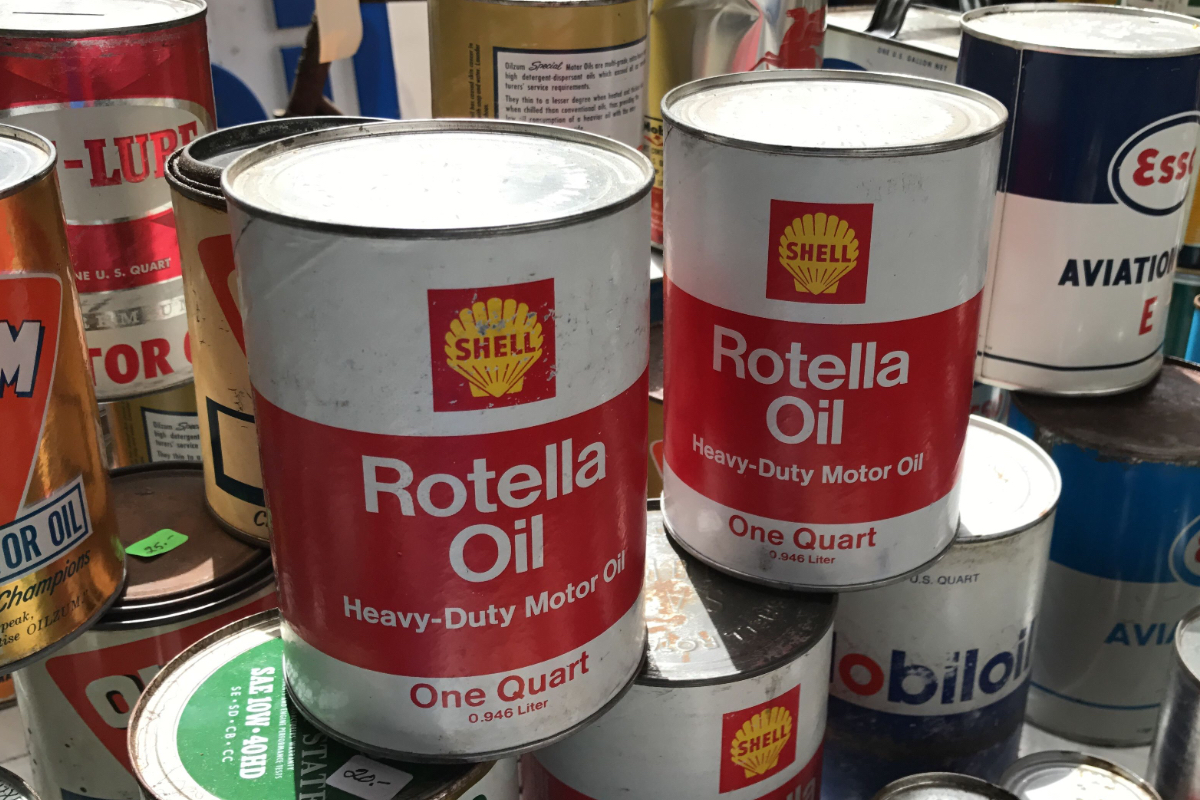
For decades, picking oil for your car was simple. Way back when oil was packaged in cardboard cans, you picked the viscosity (one number only), whether it was detergent or non-detergent, and that was about it. There may have been industry or manufacturer specifications for the oil, but few people paid attention to them. The first specifications were SA for gasoline engines, and CA for diesels.
But things changed as far back as the late 1950s, when multi-weight oil was introduced. Viscosity index improvers allowed oils to be “thinner” at lower temperatures and “thicker” at higher temperatures. 10W-30 and 10W-40 were popular early multi-grade oils. Consumers liked them because they eliminated the need to change oil when the seasons changed.
Standards became more comprehensive, too, when the American Petroleum Institute (API) created categories for oils with different additive qualities. Manufacturers got on board with the API, identifying what were called quality marks to signify that oil met the manufacturer’s performance standards.
When did this get complicated?
The simple answer is, as engines became more complicated, so did oil selection. Starting in the 70s but accelerating in the 90s, changes to engines had a big impact on oil specifications. These changes included:
- Manufacturing tolerances: Today’s engines have far tighter tolerances than they did decades ago. This means that oil has to travel through more confined spaces and lubricate surfaces that are closer together.
- Emissions equipment: Starting in the 70s, emissions standards have sparked many changes to engines. Not only do engines that meet more stringent emissions standards tend to generate more heat, which creates stress on lubricants, it’s important that oil that travels through the engine and exhaust doesn’t damage sensitive parts including catalytic converters.
- Emissions equipment: Starting in the 70s, emissions standards sparked many changes that influenced the design of new engines. Not only do engines that meet more stringent emission standards tend to generate more heat, but they also create more stress on lubricants. It’s important that as engines are re-developed, oil can travel through the engine and the exhaust doesn’t damage any sensitive parts, including catalytic converters.
- Forced induction: Many more engines today are turbocharged or supercharged, sometimes both. Turbochargers require oil that doesn’t break down at high temperatures, and they also contribute to overall higher engine operating temperatures.
- Fuel economy: Fuel economy standards have driven many of the industry’s decisions on both vehicle and engine design for decades, and motor oil selection is part of this decision-making process. Many modern oils include a fuel economy specification in their certification standards.
The upshot of all this is that consumers can’t necessarily just walk into the local auto parts store and grab any oil off the shelf. Even if they look for a specific brand or viscosity that matches their car’s specification, that oil may not be appropriate for their vehicle.

How do you choose the correct oil?
Manufacturers have oil standards for each engine they produce. For VWs, the standards are pretty straightforward and are listed later in this article. But to make it simple:
- Only use oil that has the VW certification for your engine. Be careful as oil companies can use misleading language like “meets or exceeds” or “designed to meet.” If the oil doesn’t specifically say it meets the VW standard for your vehicle, it doesn’t have VW’s certification. Certification costs money, so some companies skip it.
- Use your owner’s manual, but verify the information. The owners manual includes information on oil selection and change intervals. However, VW manuals are used in vehicles with different engines, so double-check to make sure what your manual is telling you is correct.
And what about oil change intervals?
Ask 5 people how often you should change your oil, and you’ll probably get at least 5 answers. You probably have your own opinions on this topic, as well. Our best advice is to follow the manufacturer’s change intervals stated in the owners manual or the maintenance schedule. You can do something different, but when in doubt, follow the manual.
Here we take a deeper dive into the oil specifications for VW diesel and gasoline engines.

VW Oil Specifications
Many early TDI adopters know that when the engine was launched in the US, dealers tended to recommend the same non-synthetic oil that they used in gasoline engines of that period. This caused coking of piston rings due to how close the piston and rings were to the combustion event in TDIs. VW soon changed its recommendation to Synthetic Oils that met their 505.00 specifications.
As time went on, new standards emerged, first for Pumpe Düse, or PD engines, and then for common rail TDIs with diesel particulate filters or DPFs. Here are highlights of those standards:
Common VW Specifications for Diesel Engines
| VW Specification | Recommended For | Key Characteristics |
|---|---|---|
| VW 505 00 | Older diesel engines (1Z, AHU, ALH). | Standard diesel engine oil. |
| VW 505 01 | Pumpe Düse (PD) diesel engines. (BEW, BRM, BKW) | Specific formulation for PD injector systems. |
| VW 507 00 | All diesel engines with DPFs, including those with long-life service intervals. (CBEA, CJAA, CKRA, and others) | Low SAPS for DPF protection, common for most modern VW diesels. |
There were other oils offered during the TDI’s life in North America, most notably the 506 00 specification for V10 Tourags. This standard has been merged with the 505 01 standard. The viscosity of some of these oils has also changed. The 505 00 oil has always been 5W40, but the 505 01 was originally a 5W40 and changed to a 5W30 at some point. However, 5W40 oils from some refiners (most notably Pentosin) still exist.
What about gasoline-powered VWs?
Recent and current gasoline VW engines run the gamut from the low-output 2.0 and 2.5 normally aspirated engines all the way to the 300-plus horsepower EA888 engine in the current Golf R. And VW gas engines have been subject to all the evolutions listed above. Think about it: A 2.slow was struggling to get more than 50 HP per liter of displacement. Now the EA888 delivers in excess of 150 HP per liter, and produces fewer emissions and gets better fuel economy. You can imagine how much more stress that puts on lubricants.
Thankfully, VW has kept their oil standards relatively simple. They’re summarized below.
Common VW Specifications for Gasoline Engines
| VW Specification | Recommended For | Key Characteristics |
|---|---|---|
| VW 502 00 | Older gasoline engines, or those without long-life service intervals. | High performance, suitable for various climates. |
| VW 504 00 | Newer gasoline engines with long-life service intervals (flexible service intervals). | Low SAPS (Sulfated Ash, Phosphorus, Sulfur) for extended catalytic converter life. |
| VW 508 88 | Latest generation gasoline engines (often 2.0 TSI) requiring 0W-20 viscosity. | Ultra-low viscosity for improved fuel economy; typically green in color. |
VW pairs gasoline and diesel certifications on oils that can be used in both types of engines. For example an oil that meets the 502 00 spec also meets the diesel 505 00 spec. 504 00 and 507 00 go together. 508 88 and 509 99 are also gasoline/diesel specs, respectively, but there have been no diesel VWs that use the 509 spec sold in North America.
Summary
When most VW fans purchase a new or used VW, one of the first things they want to do is replace fluids and filters. That gives rise to the question of what oil to use. With a little knowledge and research, making the right choice isn’t difficult. Enjoy the drive!

If you’re unable to find the manufacturer’s recommended oil spec. for your vehicle, simply enter the year, make, and model on our website (IDParts.com “Select Vehicle” right at the top of the page). You’ll see a curated Oil Change Kit
OTHER VEHICLES: