At the beginning, none of us at IDParts had direct experience with the auto parts industry. We were diesel enthusiasts, we knew a fair amount about auto maintenance and repair, but the extent of our parts knowledge consisted of going to the dealership or a parts store to buy parts. In this article, we’ll describe where the industry is, where we’ve been, and speculate a little about what’s to come in the future.

OE, OEM & Aftermarket
Like asking who makes the best engine oil, this is a question that will never go away. By now, most people recognize that auto manufacturers only actually make a percentage of the parts in the cars they sell. The body, wiring harnesses, seats and other interior parts, and trim are usually by the car company. But most other parts including transmissions, suspension and brakes, steering, turbochargers, lighting, A/C, and of course lubricants, are made by third parties, even if they’re branded and sold as coming from the auto manufacturer.
We have definitions for OE, OEM, and Aftermarket. They may not be universally accepted, but here they are:
- OE (Original Equipment): These are the parts that were used in the car’s original manufacture, either made by the car maker or another company. They can be bought at a dealer and are in the car manufacturer’s packaging. What’s in the box may be made by another company, but it’s branded as from the car maker.
- OEM (Original Equipment Manufacturer): Car makers contract with many other manufacturers to make parts for their cars. Brakes are a good example: for the 2015 Golf TDI, VW contracted with Bosch to make the brake calipers. Bosch delivered to VW assembly plants what is described as “fully loaded” calipers, which means they include the caliper carrier and brake pads. These are considered VW parts, as they are included in the Golf you buy new. However, they’re made by a third party.
There are many OEMs out there: another big one is INA, which includes the brands Schaeffler, LuK, and FAG: They make a lot of the timing belt, flywheel, clutch, and bearing components for European diesels. - Aftermarket: Every other supplier is in this category. We describe the aftermarket as companies that sell parts for auto repair, but do not sell to the auto manufacturers. Two of our favorites in this category are Sidem, a Belgian company that makes control arms, tie rods, sway bar links, and Lesjofors, a Swedish company that’s been around for 100+ years making springs. Both make very high-quality parts that are comparable to OE, but they sell to the retailers like IDParts, not to auto manufacturers.

Brands
Brands: there are a lot of them. The IDParts site lists all the manufacturers we’ve purchased from in the last 20 years. Currently the list has 298 entries. A significant number of them no longer exist, and we continue to add new ones.
If you’ve been around for a while, some of the most recognizable brands have either faded or disappeared, including Mintex, Meistersatz, TRW, and most recently, Centric. There are new-to-us brands you may not have heard of, like Ajusa, S.I.D.A.T., or Bogap. And others have merged, like Hella/Pagid, Borg-Warner/Whaler, and Mahle/Behr. Or they’ve split, like CRP and ContiTech. And there are big players in the OE supply world that sell to the aftermarket in different brands, like Elring, FelPro, Pierburg, and Kolbenschmidt. And these are only a few.
There is another big category of brands: those who package and sell, but do not manufacture. Like the car you purchase, many manufacturers put parts that other companies make in their packaging. But some do this much more than others. The big ones currently are Febi-Bilstein and VIEROL, who you may recognize as Viaco and Vemo.

Manufacturing Locations
Just like the cars that they get installed in, countries of origin for auto parts have changed drastically in the last 20 years. When we started, most parts were made in Europe: Germany, Italy, Spain, even the UK. Soon, more Eastern European countries were appearing on package labels: Turkey, Bulgaria, Czechoslovakia, and others.
Then there’s China. Starting about 10 years ago, Country of Origin China started to appear more and more on packaging, often on parts from suppliers based in Europe. Recently I processed an invoice from a well-known German parts packager, and all but one of the items were from China.
German automakers sell a lot of cars in China. So it makes sense for component manufacturers to move production closer to where autos are assembled and sold. German brands like MANN, Behr, and INA have production facilities in China, to name a few. Our experience indicates that if a company has established production in China (not outsourced) and monitors quality, the parts they manufacture are comparable to what they produce in Europe.

Parts Distributors
Like manufacturing, parts distributors have gone through many changes in the last 20 years. Some have disappeared, most others have been sold or merged multiple times. We buy daily from several distributors, and one has changed names twice in the past 5 years. Another has been sold twice.
Fluctuations in purchase volumes from repair shops and challenges in maintaining product margins have made that business difficult. Shops are more creative in sourcing products, planning ahead, and using online retailers instead of distributors who offer same-day delivery. And as the manufacturer landscape continues to change, it becomes difficult for distributors to maintain inventory.

Supply Chain and Pricing
Supply chains for products have experienced a few upheavals in the last two decades. The recession of 2008 saw manufacturing locations close and production shift to other countries or continents, or stop altogether. It seems automakers used the recession as a trigger event to stop production of some replacement parts, as did some aftermarket parts manufacturers. Others moved production to lower-cost countries. Lead times for product purchases got longer, and inventories shrank. We now experience more frequent out-of-stocks at both the manufacturer and distributor level, and maintaining IDParts stock is more difficult.
Pricing has increased, as we’re sure you’ve noticed, but it also changes more frequently. Where dealers used to change prices once or twice a year, now they change monthly, or even daily. Distributors do the same thing. And we see price changes at some manufacturers nearly every time we order.
And of course, tariffs have had an impact on pricing. Despite some being stopped by the Supreme Court, others are still in place. Two door lock modules, for example, can have as much as a 20-30% cost differential depending on the country of origin and the tariff from that country. It’s not just China: Importing from other countries in Europe and Asia can incur high tariffs. And tariffs on aluminum and steel are high from many countries.
IDParts, like some manufacturers and suppliers, try to minimize the impact of tariffs on retail prices by absorbing some of that cost or spreading it out over a product line instead of adding the full tariff to each product. Despite this, costs and prices have increased.

The Future
Although the aftermarket auto parts industry has been around for many years, we would not consider it mature. Parts supply is erratic, OEM suppliers defer to auto manufacturers ahead of supplying to the aftermarket, sometimes leaving us out of parts. And as ownerships and assembly sites shift, quality, supply, and pricing sometimes suffers.
We don’t think that any of these issues will be resolved in the near future. Quite the contrary: They may get worse. Honestly, we view that as an opportunity. Resellers can smooth out supply and pricing issues by planning, purchasing carefully, constantly shopping for better parts at better prices, and maintaining inventory. The retailers that do that well will succeed.
Summary
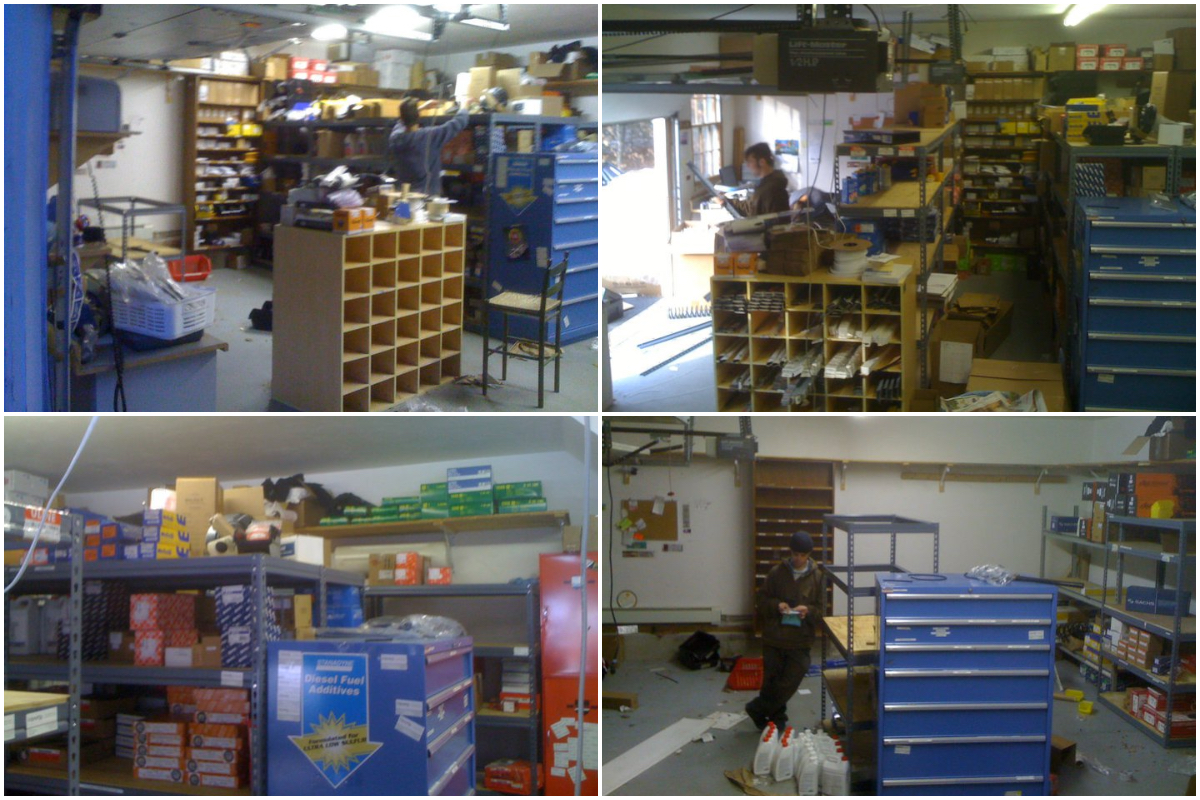
Lots have happened since we started in a garage in 2006. The parts landscape has become larger, more diverse, and the pace of change has accelerated. We’re doing our best to keep up and source the best products we can find at the best prices. Good thing we enjoy this work.