Every 4-cylinder TDI is equipped with a timing belt. When a timing belt fails in a VW TDI engine, it can lead to serious engine damage. The timing belt is responsible for synchronizing the crankshaft and camshaft rotation, ensuring that the engine’s valves open and close at the correct times during each cylinder’s intake and exhaust strokes. In many VW TDI engines, the timing belt also drives the water pump and fuel pump.
The VW TDI engine is an interference engine, meaning that the pistons and valves occupy the same space in the cylinder, but at different times. If the timing belt breaks the camshaft will stop turning almost immediately which causes the valves to stop moving as well. However, if the crankshaft continues to turn – either due to the momentum of the engine or being in-gear driving at speed – the pistons will continue to move. The pistons will then strike the stopped valves. This will immediately ruin the valves and lifters.
When the crankshaft and pistons are stopped will determine the extent of the damage. If the engine stops immediately – for example if the timing belt broke during start-up – it’s possible that new valves and lifters may be all that is required. However, if the belt broke while the vehicle was being driven, especially on the highway, the damage would likely be catastrophic. The pistons will repeatedly impact the valves until eventually a valve breaks and drops into the cylinder. The valve will then bounce around in the cylinder until the damage is so severe that the engine can no longer rotate, also known as seized. If the engine is seized it likely means the engine cannot be salvaged and must be entirely replaced.
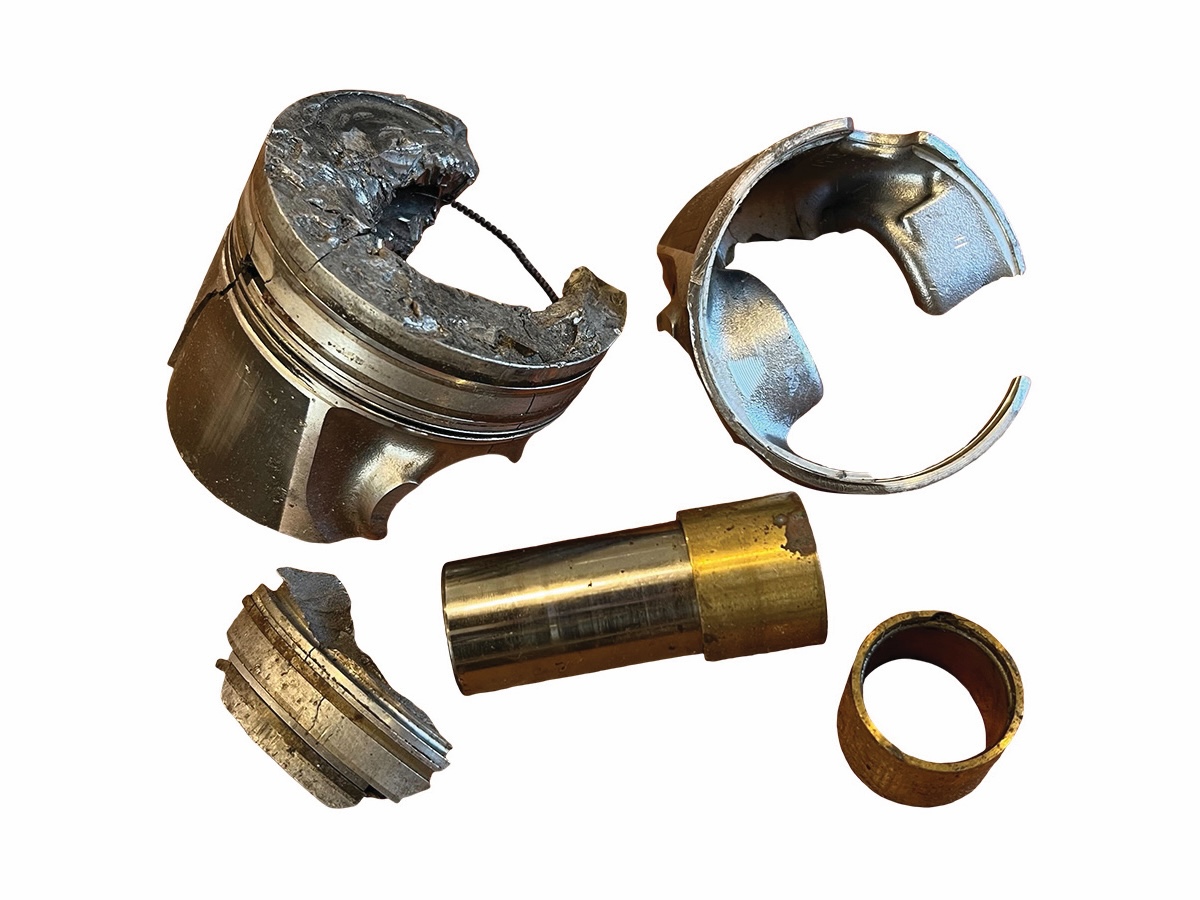
The piston above was in a motor which experienced timing failure while driving at 70 mph. The engine eventually locked up completely. Upon disassembly not only was the piston in pieces but the connecting rod was severely bent and the block cracked.
Causes of Timing Belt Failure
Even though the phrase “timing belt failure” suggests that the belt is to blame, in our experience the belt is rarely if ever the real cause. In most cases some other failure contributed to the belt itself failing.
These are some things that can cause the timing belt to fail which aren’t the fault of the belt itself:
- Water Pump Failure – on engines where the water pump is driven by the timing belt, which includes most modern 4-cylinder TDIs, a failed water pump can seize. The water pump sprocket will then start ripping the teeth off the timing belt, shredding it until it snaps. This is why it is strongly recommended to replace the water pump with every belt job, even though the water pump does not have an official service interval.
- Tensioner or Roller Failure – the timing belt is routed around the crankshaft and camshaft but also around idler/rollers (which guide the belt and have no other function) and the tensioner. The tensioner ensures the belt stays at the right tightness as the engine speeds up and slows down. We see cases all the time where the belt was replaced but these other items were not and when they fail the belt can no longer hold the engine together.
- Engine Mistiming – if the engine was assembled without proper timing, the belt will be stressed as the pistons and valves make contact which is not severe enough to cause immediate failure. Timing problems typically result in failure 1-3 thousand miles after engine assembly.
Preventing Timing Belt Failure
Following the scheduled service interval is the most important part of avoiding a costly timing failure. TDIs have intervals ranging from 60,000 miles on some older models to 130,000 miles on the most recent motors. As noted above, a full replacement includes all rollers/idlers, tensioner and water pump. Skipping on any of these items may result in a much bigger cost down the line. Secondly, and just as important, is completing the job properly, whether that is yourself or finding a reputable shop. As always, we recommend looking at the TDI Trusted Mechanics List – a list maintained by TDIClub members – to see if there is a good shop in your area.
Finally, if you believe your vehicle has experienced a timing failure of any kind it is vital that you immediately stop driving the vehicle and avoid trying to start/restart it.