After 24 years and 520K miles, my 2002 Jetta Wagon (aka IBW) has, obviously, had components wear out and fail. But this car is a little different, because I’ve also upgraded many parts before they failed. Here are a couple examples:
- I’ve swapped suspension at least 7 times as I’ve tried new dampers and set the car up for track days.
- Clutches: It’s had 5, but none of them were worn out when replaced. I upgraded clutches as I added power.
Similar with injection pumps (4) and turbochargers (also 4). One IP was replaced because it was leaking, but the rest were upgrades. And I’ve never experienced a turbo failure, though the turbo that is currently in the car is being replaced before it fails.

By comparison, my son has a 2002 Golf TDI with similar miles on it (508K). It had the original turbo replaced at 427K, only because we were refreshing the cylinder head and couldn’t bring ourselves to put the original turbo back on. The original clutch lasted 315K, and, as far as we know, it has its original injection pump.
But what does wear out on a MkIV, and when?
Of course they need timing belts (mine’s had 5 replacements), and other service items. I think about those 50+ oil changes, most of them done by me. Haven’t had an oil pan fail, for what that’s worth.
Let’s look at this by category to dissect when certain components need attention.

Engine
The good news is that most agree that the ALH engine is the best of VW’s TDIs. But it’s not immortal. Here’s what to expect:
- Fuel delivery: Injection pump life is highly variable and seems to largely depend on fuel quality. Some fail at 80K miles, some seem to last forever. But average life expectancy seems to be 250-300K miles. Here’s where a lubricity additive can pay off over time. Injectors have similar life spans, although many owners leave them in longer.
- Long block: The life span of the bottom end of an ALH appears to be close to infinite. It’s safe to say that the rest of the car will be worn out before the bottom end of your ALH, assuming proper maintenance. Valve guides and seals are a relative weak point in the head, and those tend to wear and let oil leak into the cylinders after a 250K miles or so. Camshafts can show wear around the same time, but not always.
However, IBW is an exception to this rule, and it was my own doing. I steadily upgraded the engine’s output until it made 185 HP and 320 torque at the wheels. I had a Rocketchip tune in the car that allowed me to rev it to 6000 RPM. I did many, many track days with that setup and used that 6000 RPM. It was great to be able to get to 115 MPH in 4th.
However, it had a cost. After 120K miles with the tune and nearly 300K miles on the engine, the rods were bent, valve guides were badly worn, and the cylinder bores were oval. At that point I replaced the long block with one of the few factory ones left in North America.
That was 230K miles ago. When I replaced the long block, I dialed back the output with smaller injectors, a stock turbo, and Rocketchip Stage 3+ (19.5 PSI). The car now makes about 140/260 at the wheels. Oil consumption is minimal, and I think this engine will last the rest of the life of the car.

- Accessories: Hard to say for these components. Starters and alternators seem to last a long, long time: I think I’ve replaced two of each in a half million miles. These cars do seem to go through A/C compressors more quickly: my car has had at least 2 replacements, and it seems that every used ALH I’ve purchased over the years has needed an A/C compressor. Power steering components also seem to last forever, at least in my experience.
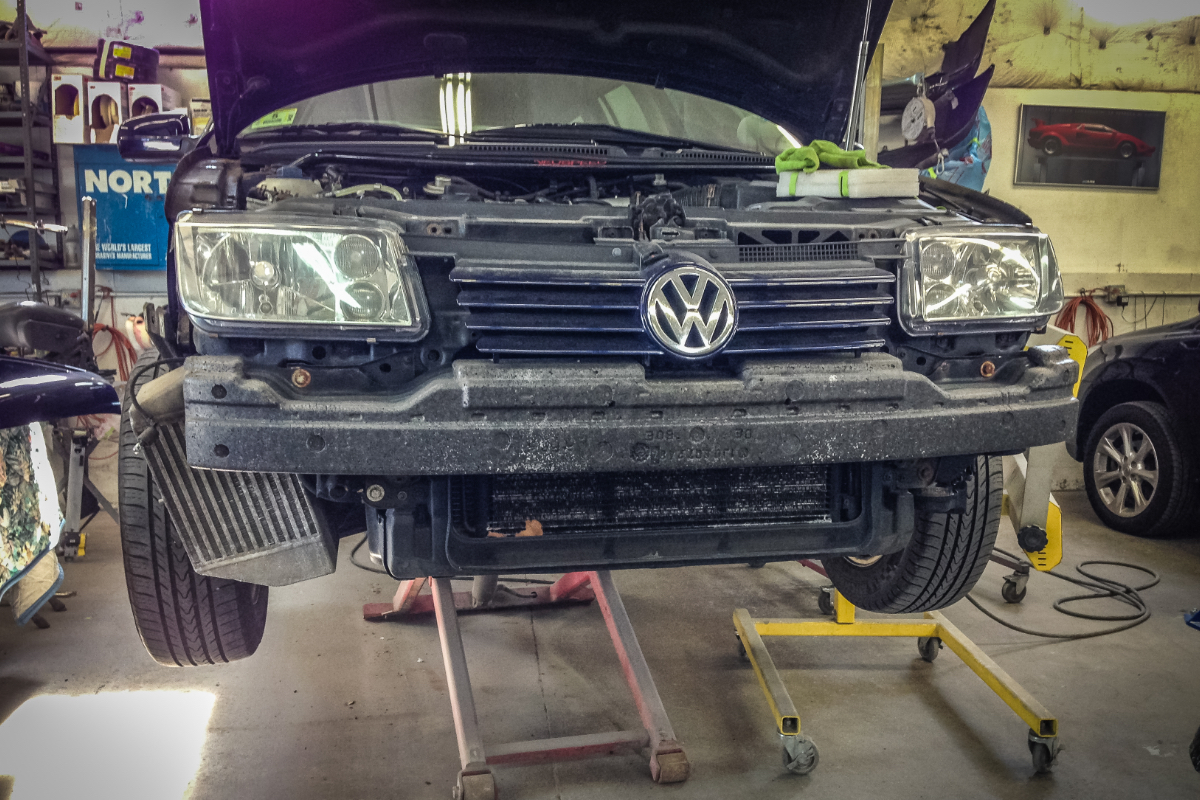
- Turbocharger: I upgraded the turbo during the car’s life, to a 17/22 (remember those?) at about 170K. I went back to a VNT-15 when I replaced the engine.
Drivetrain, Steering, Suspension, and Brakes
Recently a customer contacted us to ask about what axles lasted longest on MKIVs. My immediate thought was, “the OE ones.” Although you can eventually break them and I had one fail spectacularly (at 385K), they last a very long time. The CV boots do fail, but if you replace them promptly, the axles will go and go. My son’s Golf has the original axles at 508K miles.

What about other components?
- Struts and Shocks: The factory dampers in my wagon were pretty much shot at 60K miles. Aftermarket dampers last longer: I seem to get about 150K out of Konis before they show weakness. Lots of people say that Bilstein HDs last longer.
- Bushings: Whether Audi TT or stock, front control arm bushings seem to last about 150K miles. Rear axle bushings last about twice that long, as long as the rear suspension is in good condition. If your shocks are worn, the rear axle bushings will wear out faster. I’ve only had front control arm bushings fail once, and that time they got noisy.
- Steering and bearings: Ball joints and tie rods have worn over the years, but not often or with any regularity. I think I’ve replaced front wheel bearings 3 times, rears twice. I did manage to break a wheel hub during a track day, but was still able to limp the car home.
- Brakes: I know I’m easy on brakes. The OE front and rear brakes wore out simultaneously at 155K. And at that time, I was commuting daily in traffic and driving to NYC regularly. Pretty impressive.
I used a lot of brake pads when driving on the track, but since I’ve stopped doing that, brake pads and rotors just seem to last a long time. And I finally replaced the rear calipers last year at 480K miles. Front calipers are original.
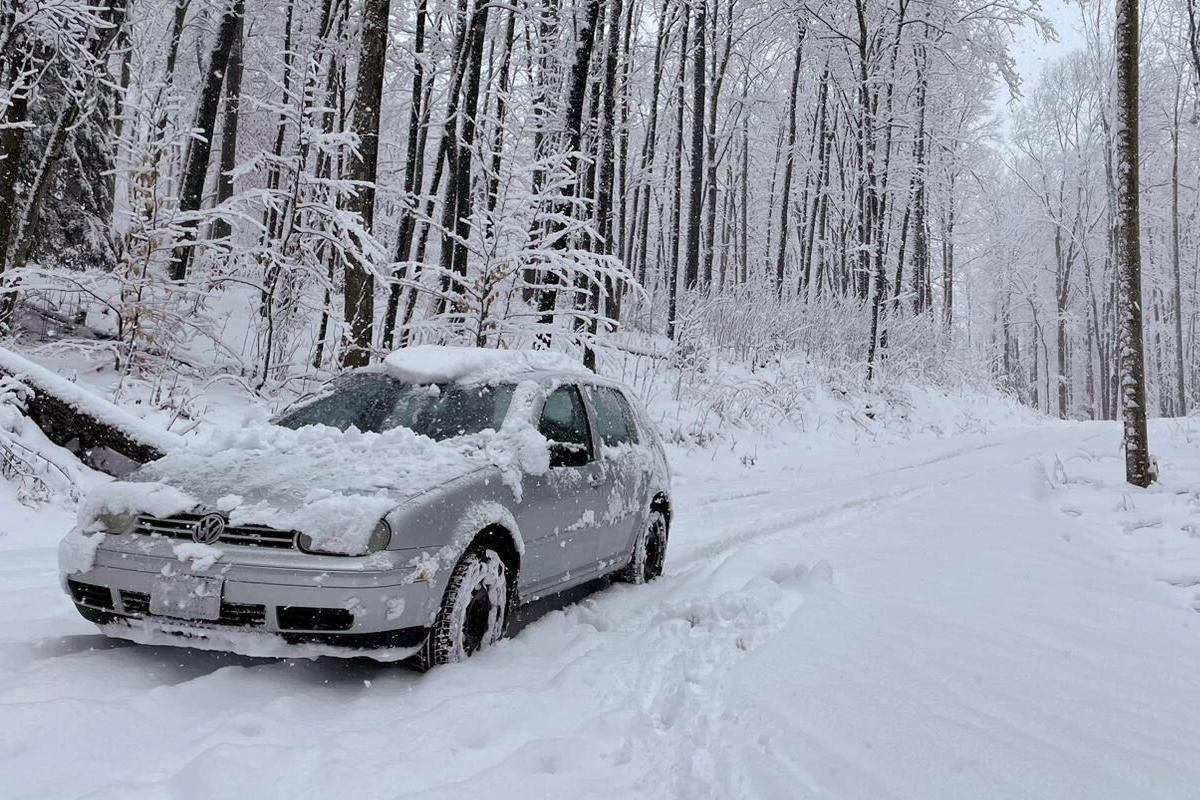
After 24 years, my rear axle broke last month during a blizzard. It appears that the stabilizer bar in the axle had failed sometime before the axle, which probably accelerated its failure.
Electrical and Body
I got my Wagon because someone had ordered it and it took six months to arrive, and by then the original buyer had moved on. I nearly didn’t take delivery because it had crank windows. Little did I know what a plus this would be. It also has manual mirrors and the mirror and rear window heater are controlled by a switch on the dash. So none of those components have failed.
I did have a comfort module fail about 10 years ago. And I’ve replaced a couple of door lock modules. Otherwise, no electrical issues, except for an occasional recalcitrant rear hatch latch. Oh, and sometimes the rear wiper won’t shut off. But it seems to fix itself.
I’m on my 3rd set of headlights. I replaced the stock lights with e-codes early in the car’s life, and those eventually fell apart. It has stock GLI lights in it now with fogs.

MKIV rust prevention is far, far better than the A3s, fortunately. The underbody has held up well, but fenders and rockers have rusted. I had the rockers repaired, front fenders replaced, and the hatch replaced (they rust at the bottom window corners where there’s a weld that breaks), at 11 years, 10 months under the VW 12 year rust warranty.
Since then, I’ve replaced the fenders again and had the rockers cleaned up again. Some small rust spots are starting to appear on the body, on the right rear rocker, the back edge of the hood, and on the leading edge of one door. Not sure what to do about those.
Other minor things: I’ve been through a lot of floor mats, and now run monster mats all year. And I’ve had 3 driver’s seats. The current one is out of a wrecked wagon just like mine, but it had only 90K on it when it crashed.
Summary
As I’ve mentioned before, I’ve owned IBW longer than any other vehicle. When I bought it I had no intention of keeping it this long. But at some point, maybe 10 years ago, I decided I was in it for the long run and that I’d replace whatever was needed to keep it in the best possible condition, regardless of cost. That approach, it turns out, has served me well. The car has performed well its entire life, and, in fact, maintenance and repairs have not gotten out of hand.
One of my co-workers says that every part of the car is beyond its service life. That is true. But IBW soldiers on. VW makes great cars.